
The security questionnaire from your largest client just landed. It's 200 questions. Your IT provider can answer maybe 40 of them. The rest require someone who understands your firm's risk posture, not just your firewall configuration.
"We don't need a full-time CISO. We just need someone who knows what they're doing."
The managing partner asking this question was running a 50-lawyer firm. They had an outsourced IT provider who managed their systems competently. They had cyber insurance. They'd had a security assessment done a year ago.
But they didn't have anyone who could:
- Answer the increasingly detailed security questionnaires from enterprise clients
- Tell them whether their IT provider's recommendations were appropriate
- Translate security risk into terms the partnership could evaluate
- Represent the firm's security posture to insurers and regulators
They needed security leadership. They didn't need a full-time executive.
This is the gap that fractional security leadership — sometimes called vCISO (virtual Chief Information Security Officer) — fills.
What Fractional Security Leadership Actually Means
A fractional CISO provides senior security leadership on a part-time basis. Rather than hiring a full-time security executive (difficult to justify for most law firms), you engage experienced security leadership for a defined scope — typically a set number of hours per week or month.
The fractional CISO becomes part of your extended leadership team, providing:
Strategic Direction
What security controls should the firm invest in? What's the appropriate security posture given your size, client base, and risk appetite? Where should limited resources be focused?
A fractional CISO provides the strategic perspective that IT service providers — focused on technical operations — typically can't.
Governance and Oversight
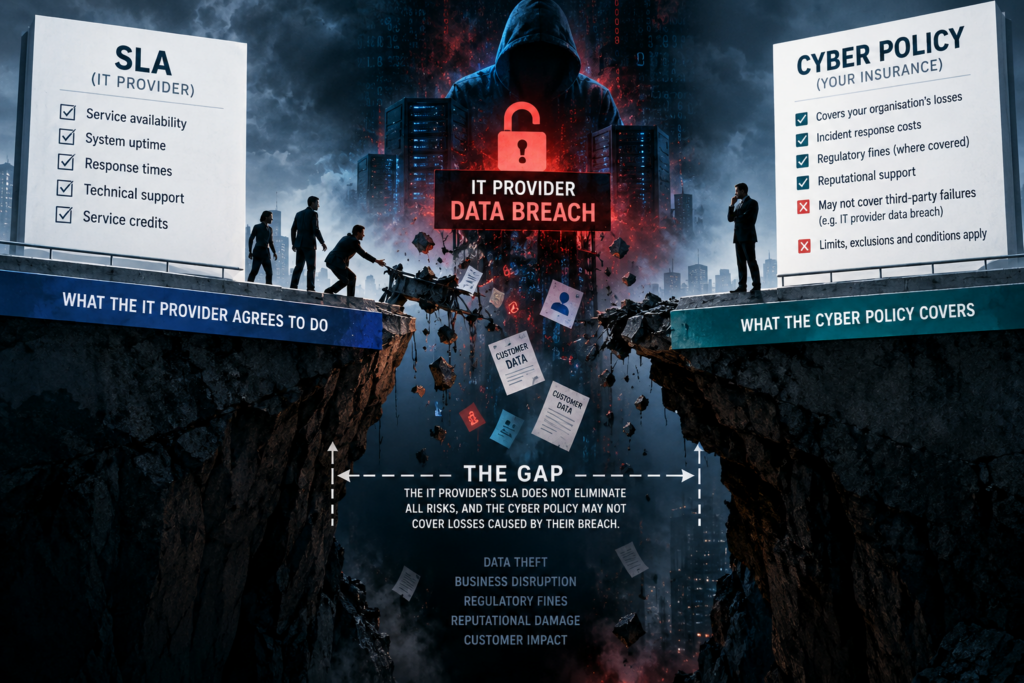
Is your IT provider actually doing what they should be doing? Are security tools configured correctly? Are policies being followed?
The fractional CISO provides independent oversight of your security function, whether internal or outsourced.
Translation
Communicating with the partnership about security in business terms. Translating technical recommendations into risk-based decisions. Helping partners understand what they're actually being asked to approve.
Having sat in partnership meetings at a global law firm, I can tell you — if security recommendations arrive in technical language, they die on the agenda. Security decisions are business decisions. They need to be presented that way.
External Representation
Answering security questionnaires from enterprise clients. Presenting to cyber insurers. Responding to regulatory enquiries. Supporting client pitches where security is a consideration.
These tasks require someone who can speak with authority about the firm's security posture — and who understands the nuances of what can and should be disclosed.
Incident Leadership
When security incidents occur, the fractional CISO coordinates response. They're the senior decision-maker during crisis, working with IT, legal counsel, insurers, and other stakeholders.
In my experience leading incident response across multiple jurisdictions, the first 72 hours determine whether a breach becomes a manageable event or an existential crisis. Having experienced incident leadership available — without maintaining a full-time executive — is often when fractional arrangements prove their value most clearly.
The Alternative: What Firms Do Without Security Leadership
Without dedicated security leadership, firms typically rely on:
The IT Person
IT staff or outsourced providers manage security as part of their general IT responsibilities. They're focused on keeping systems running. Security is one priority among many.
The limitation: IT operations and security have different objectives. Operations prioritises availability; security prioritises protection. Without dedicated security leadership, security often loses.
The Partner Who "Gets" Technology
A partner with personal interest in technology takes informal responsibility for security matters. They're consulted on security decisions and may represent the firm on security issues.
The limitation: Being interested in technology isn't the same as security expertise. And partnership time is expensive — there are better uses for billable-hour capacity.
No One
Security happens by default. IT does what they do. Insurance is purchased. No one actively manages security posture or makes strategic security decisions.
The limitation: Obvious. Security risks grow unmanaged until something goes wrong.
The Privilege Problem Most Security Consultants Don't Understand
Law firms face a unique security challenge that other professional services don't: the intersection of cybersecurity incident response and legal professional privilege.
How a breach is investigated and documented can affect whether communications remain privileged. The forensic methodology, the reporting chain, who is engaged and under what terms — all of these decisions made in the heat of an incident have downstream implications for privilege claims.
This isn't something a generalist security consultant typically understands. And it isn't something you want to figure out for the first time during an active breach. A fractional CISO who works exclusively with law firms builds this understanding into every aspect of security governance, from incident response planning through to evidence handling and regulatory notification.
What the Engagement Looks Like
Fractional CISO arrangements vary, but typical engagements include:
Regular Engagement Hours
A set number of hours per week or month dedicated to ongoing security leadership. This might be 4 hours per week for a smaller firm, or 2 days per week for a larger one.
- During these hours, the fractional CISO:
- Reviews security controls and status
- Implements fixes or new controls
- Provides security awareness training for staff
- Meets with external suppliers to address any security concerns
- Addresses emerging issues
- Progresses strategic initiatives
Monthly Reporting
Regular reporting to the partnership or management committee on security posture, activities, and risks. This creates visibility and accountability.
Client and External Support
Support for client security questionnaires, insurer enquiries, and other external requirements. This work often happens in bursts — quiet periods followed by urgent deadlines.
Incident Response Availability
On-call availability for security incidents. When something happens, the fractional CISO is available to lead response, even outside regular engagement hours.
Strategic Projects
Specific projects as needed — security assessments, policy development, vendor evaluations, training programmes. These might be scoped separately or included in regular hours.
When It Makes Sense
Fractional security leadership fits firms in a particular position:
Large Enough to Need Guidance
Very small firms, under 10-15 lawyers, often don't have the complexity to justify even fractional security leadership. Their IT needs are simple, and external security review every year or two may be sufficient.
Not Large Enough for Full-Time
Large firms, 100+ lawyers, often can justify full-time security leadership. The cost is spread across enough revenue to make sense.
The middle ground — 20 to 100 lawyers — is where fractional arrangements work best. Big enough to have complex security needs. Not big enough to justify a full-time hire.
Facing External Pressure
Enterprise clients demanding security assurances. Insurers asking detailed questions. Regulatory scrutiny increasing — particularly around CPS234 for firms with financial services clients and Essential Eight maturity for those working with government. These external pressures often trigger the need for security leadership.
After Incidents or Near-Misses
A security incident — or a close call — often creates partnership appetite for proper security leadership. Fractional arrangements let firms respond without committing to permanent overhead.
Rapid Growth or Change
Firms going through growth, merger, or transformation face elevated security risk. Fractional leadership provides experienced guidance through the transition.
What It Costs
Fractional CISO costs vary based on scope and experience level.
In Australian law firms specifically, we typically see fractional arrangements starting around 1-2 days per month for firms in the 20-50 lawyer range, scaling up for firms with enterprise clients or regulatory obligations like CPS234 or ISO 27001 alignment. Monthly investment typically ranges from $2,000-$8,000 depending on hours and complexity.
This compares to $300,000-$500,000+ annually for a full-time CISO (salary, benefits, training, tools).
For most mid-sized law firms, fractional arrangements deliver 80% of the value at 20% of the cost.
When evaluating cost, consider:
- What's the cost of not having security leadership?
- What's the cost of a security incident without experienced leadership?
- What opportunities require security assurance you currently can't provide?
Finding the Right Fit
Not all fractional CISOs are equal. When evaluating options:
Relevant Experience
Security is broad. Look for experience relevant to professional services and law firms specifically. Someone from a manufacturing or healthcare background may struggle with law firm culture and concerns — partnership dynamics, privilege considerations, and the realities of client-driven security requirements are specific to legal.
At Cyooda, we work exclusively with law firms, which means every engagement builds on sector-specific knowledge rather than starting from scratch.
Business Understanding
Security leadership isn't just technical. Look for someone who understands partnership dynamics, client service imperatives, and professional obligations. Someone who can translate security into business terms the management committee will actually act on.
Availability
Fractional arrangements require actual availability. If your fractional CISO is juggling too many clients, they won't be there when you need them. Understand their capacity and commitments.
Local Presence
While much work happens remotely, there's value in a fractional CISO who can attend partner meetings in person, visit offices, and build relationships. Local presence also matters for understanding the Australian regulatory landscape — OAIC notification requirements, APRA expectations for firms servicing financial clients, government obligations (DISP and IRAP) as well as state-specific obligations.
Long-Term View
Good fractional arrangements build institutional knowledge over time. Look for someone interested in a long-term relationship, not someone who will hand off to junior staff after the first month.
Making It Work
For fractional CISO arrangements to succeed:
Clear Scope
Define what's included and what's not. What decisions can the fractional CISO make? What needs partnership approval? What's the escalation path?
Access and Authority
The fractional CISO needs access to IT systems, providers, and staff to be effective. They also need appropriate authority to direct security activities.
Regular Cadence
Establish regular touchpoints — weekly calls, monthly reporting, quarterly reviews. Security leadership can't work effectively without consistent engagement.
Partnership Buy-In
Partners need to understand what the fractional CISO does and why. Without buy-in, security recommendations get ignored, and the arrangement adds cost without value.
Integration with IT
The fractional CISO and IT function need a constructive relationship. The CISO provides direction; IT implements. Misalignment creates conflict and inefficiency.
The Bottom Line
Most law firms don't need a full-time security executive.
But most law firms do need security leadership, someone who can provide strategic direction, governance oversight, external representation, and incident leadership. Someone who understands that in a law firm, security isn't just about protecting data, it's about protecting privilege, protecting client trust, and protecting the firm's ability to win and retain work.
Fractional arrangements provide this leadership at a scale appropriate for mid-sized firms. Experienced guidance without the overhead of a full-time hire.
Here's a quick test: Who in your firm would lead the response if you received a breach notification tomorrow morning? Who would coordinate IT, legal counsel, insurers, and client communications? Who would make the call on whether to notify the OAIC?
If the answer isn't clear, that's the gap.
I offer a 30-minute security leadership review at no cost, no obligation — where we assess whether your current arrangements are fit for purpose and identify where a fractional model might strengthen your position.

The Legal Cyber Brief — monthly cyber intelligence for law firm leaders. Threats, regulatory shifts, and practical tools from the field. No fluff.

Lvl 17, Angel Place,
123 Pitt Street,
Sydney
NSW 2000
(02) 7230 1350
The Legal Cyber Brief — monthly cyber intelligence for law firm leaders.